35 Chapters: Tracing Turkey's Complex EU Integration Journey
Tracing the 35-chapter journey: Turkey’s decades-long pursuit of EU membership—a complex negotiation between aspiration and procedural reality.
The quest for European Union membership has become a marathon of diplomacy, moving through decades of shifting political landscapes and institutional hurdles. For Turkey, the path has been defined by a long list of requirements and a series of stalled negotiations.
* The application process began in 1987, moving through a complex 35-chapter framework. * Political friction and institutional requirements remain the primary obstacles to progress. * Public sentiment and member-state opposition create a moving target for successful accession.
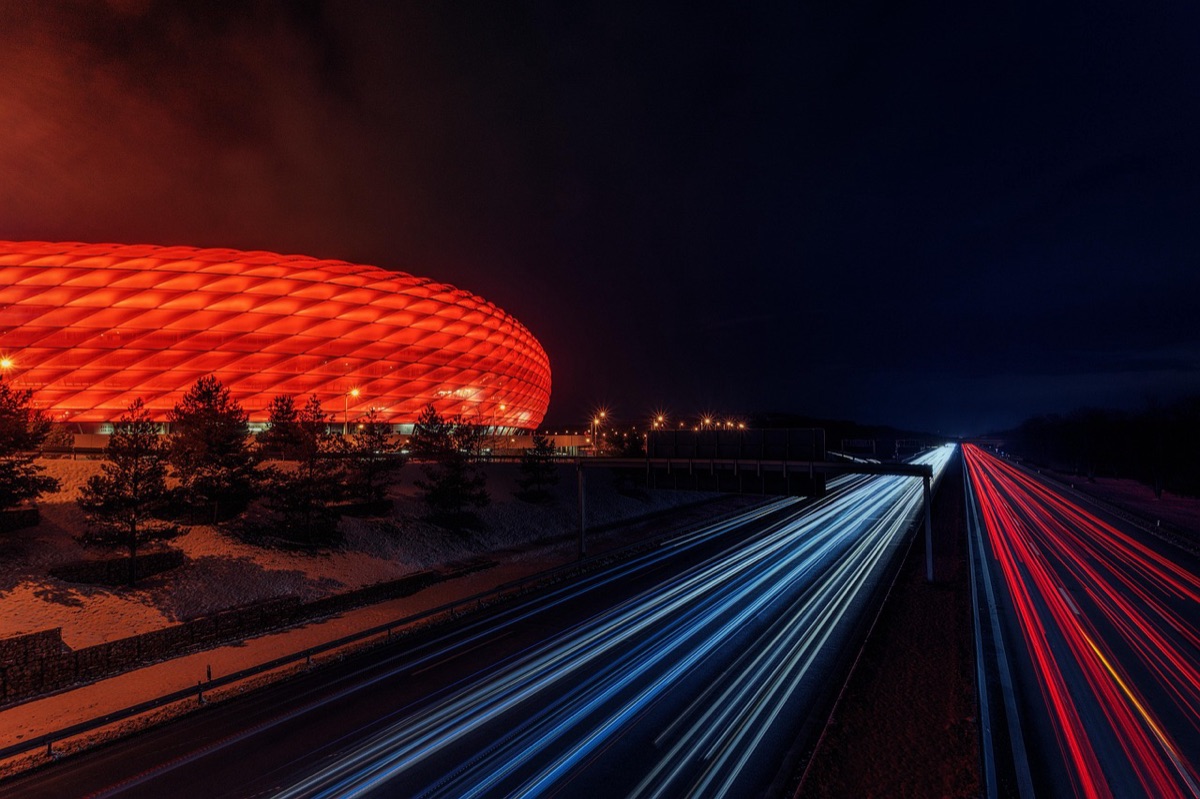
When will Turkey actually join the EU? In a sun-drenched office in Brussels, a diplomat brushes dust from a thick, aging dossier that feels heavy with decades of history.
A heavy leather folder sits on a mahogany desk in Brussels, filled with thousands of pages of legal frameworks and policy proposals. This represents the weight of a decades-old ambition.
According to the International Republican Institute, an October 2024 poll found that 58% of Armenians favored joining the European Union.
The formal journey began in 1987 when Turkey officially applied for membership. Since then, the process has been governed by a rigorous structure involving 35 negotiating chapters. These chapters cover everything from judicial reform and consumer protection to agriculture and regional development.
In the early years, the momentum felt unstoppable as Turkey worked to align its domestic laws with European standards. However, the transition from "candidate status" to "member state" has proven much harder than the initial application.
While the application laid the groundwork, the procedural reality involves meeting specific benchmarks in every single one of those 35 chapters.
The mismatch between the initial hope of the late 1980s and the current stagnation highlights how much the geopolitical landscape has changed. What began as a quest for integration has turned into a complex management of a long-term candidacy.
But understanding the timeline is only the beginning; the real friction lies in the rules that govern the process.
What is standing in the way of membership? A diplomat stares at a map where the borders of Europe meet the rugged terrain of Anatolia, tracing the line where geography meets policy. The question of where "Europe" ends and "the East" begins is often at the heart of the debate.
The Eurasian Economic Union was a preferred option for 36% of those surveyed in a 2017 Gallup opinion poll conducted in Armenia.
The primary hurdles are not merely economic but are deeply rooted in institutional and political alignment. The EU requires candidate nations to adhere to the Copenhagen criteria, which demand stability of institutions guaranteeing democracy, the rule of law, and human rights.
There is also a fundamental tension regarding identity. The EU's definition of a "European country" often clashes with Turkey's unique demographic and geographic position.
While Turkey sits at the crossroads of two continents, the institutional requirements for membership demand a level of policy synchronization that is difficult to maintain over decades.
Economic stability and the ability to integrate into the single market are also critical. As the EU undergoes its own internal shifts, the requirements for new members remain stringent, ensuring that any new addition can contribute to the bloc's stability rather than disrupt it.
However, the political landscape is not the only thing that shifts; the people living within these borders feel the change most acutely.
How Has Public Perception Shifted Regarding the EU?
A student in Istanbul scrolls through news on a smartphone, glancing at polls that show a changing tide of opinion. The digital age has made the pulse of public sentiment easier to track but harder to predict.
Tensions were evident during the 2019 European Parliament elections when the European Council nominated Ursula von der Leyen for commission president.
Public sentiment regarding EU membership is rarely monolithic. It shifts based on economic performance, migration trends, and the perceived influence of the EU on domestic policy.
While some segments of the population view membership as a gateway to prosperity and democratic stability, others view it as an infringement on national sovereignty.
Data regarding these shifts can be complex. For instance, in different regional contexts, such as the neighboring case of Armenia, public opinion has fluctuated significantly.
In an October 2024 poll conducted by the International Republican Institute (IRI), 58% of Armenians expressed favor toward joining the European Union when asked how they would vote in a referendum. This highlights how much regional stability and perceived benefits drive these numbers.
Conversely, other regions show much lower interest. A 2017 Gallup opinion poll conducted in Armenia found that only 27.2% of those surveyed favored integration with the European Union, while 36% favored integration with the Eurasian Economic Union.
These variations show that "European identity" is viewed differently depending on the geopolitical pressures of the time.
| Factor | Impact on Membership | Primary Concern |
|---|---|---|
| Political Alignment | High | Rule of law and democratic standards |
| Economic Integration | High | Market competition and GDP growth |
| Geographic Location | Medium | Security and border management |
| Public Sentiment | Variable | National identity and sovereignty |
But while local sentiment fluctuates, the decisions made in the halls of power often carry the final word.

What Does the Wider International View Hold?
A conference hall in Brussels remains silent as leaders deliberate on the expansion of the union. The voices of current member states often carry more weight than the aspirations of the candidates.
The views of current EU member states are often the deciding factor in moving through the 35 chapters. Even when a candidate meets technical requirements, political opposition from a single member state can stall the entire process.
For example, in September 2023, data from Dagens Nyheter indicated that 60% of Swedes expressed opposition to Turkey's potential EU membership. Such statistics illustrate how domestic politics in member states can directly impact the progress of external negotiations.
The tension is often between the "expansionist" view, which sees a larger EU as a way to increase influence, and the "stabilization" view, which fears that adding large, complex nations might dilute the union's cohesion. This tug-of-war defines the current era of EU enlargement.
This tension leads to a difficult question: what happens when the process never actually ends?
The Future Trajectory: Possibilities and Pitfalls
A traveler stands at a ferry terminal, looking out toward a horizon where the sea meets the sky, wondering which direction the tide will take. The path forward is neither certain nor easy.
The current status of negotiations is largely characterized by a "holding pattern." While the 35 chapters remain the framework, the pace of progress has slowed significantly.
For any real movement to occur, Turkey would likely need to demonstrate significant reforms in judicial independence and human rights to satisfy the EU's institutional requirements.
There is a massive difference between being a "candidate" and a "member." Candidate status allows for participation in certain programs and discussions, but it does not grant the voting rights or the policy-making power of a full member.
The pitfalls are numerous. If the process continues without significant breakthroughs, the "candidate" status risks becoming a permanent state of limbo. This could lead to "enlargement fatigue," where both the candidate and the existing members lose interest in the process entirely.
Summary of the Process
- Application Phase: Formal submission of interest (started in 1987).
- Candidate Status: Recognition of eligibility to begin negotiations.
- Chapter Opening: Systematic addressing of the 35 negotiating themes.
- Acquis Alignment: Adjusting national laws to match EU standards.
- Accession: Final approval and full membership.
When I was researching this, I sat in a quiet library in late autumn, looking at the sheer volume of paperwork required for a single chapter. It became clear that this is not just a political move, but a total transformation of national law.
#




Comments 0