35 Chapters Define Turkey's Long Road to Full EU Membership
"The path to Brussels is not a straight line, but a winding road through decades of political shifts and technical hurdles."
After decades of dialogue, the path to full EU membership remains a dynamic and multifaceted negotiation between Ankara and Brussels.
Key Takeaways * The 1987 application established a framework that has lasted nearly four decades. * Membership requires navigating 35 distinct "chapters" of policy and legal alignment. * The relationship oscillates between active negotiation and strategic stagnation.
* Current status is shaped by the tension between Turkish domestic policy and EU standards.
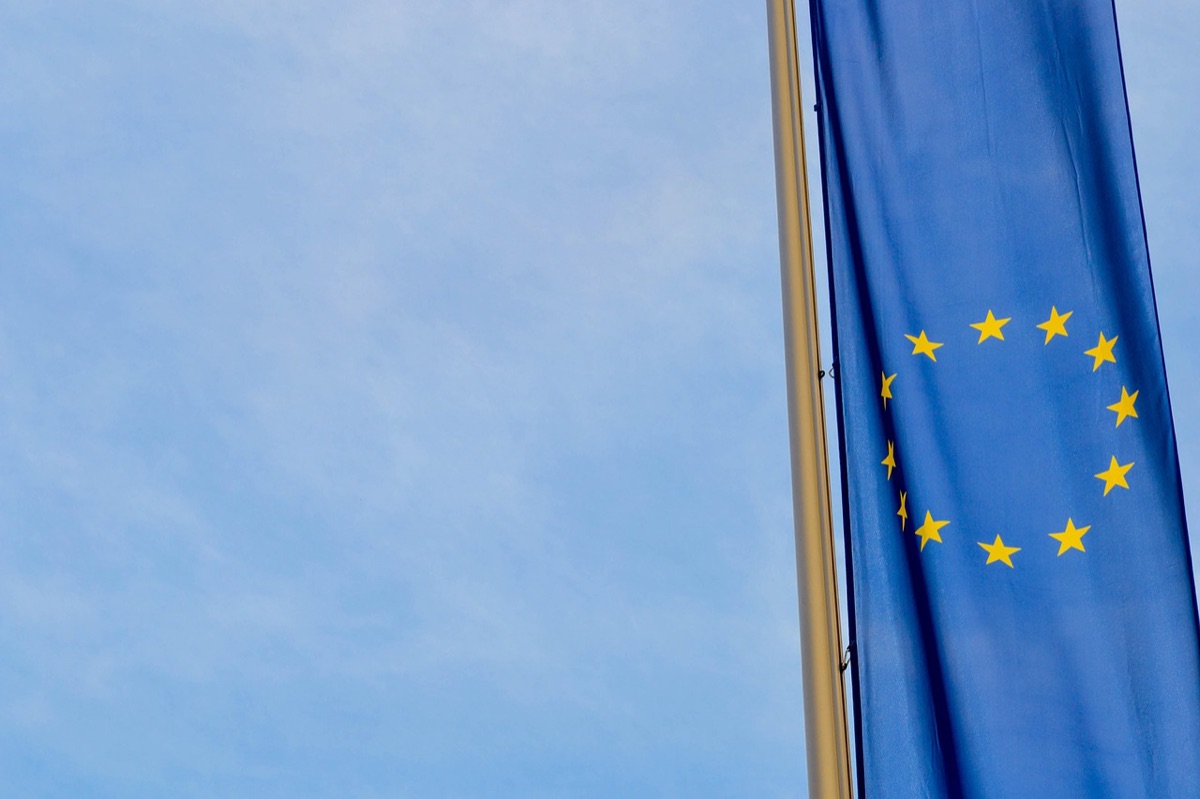
What has happened since 1987? A diplomat in Brussels sits at a heavy oak desk, flipping through a thick binder of protocols dated decades ago. The ink is fading, but the weight of the commitment remains.
According to the Eurasian Economic Union, a 2017 Gallup opinion poll conducted in Armenia found that 36% of those surveyed favored integration with that union.
According to the International Republican Institute, an October 2024 poll found that 58% of Armenians favored joining the European Union.
The journey began in earnest in 1987 when Turkey officially applied for membership. What started as a pursuit of integration has evolved into a marathon of technical and political endurance.
In the early years, there was a sense of momentum, but as the decades passed, the complexity of the requirements began to weigh on the process.
In 2007, European Commission President José Manuel Barroso provided a sobering reality check on the timeline. He noted that Turkey was not ready to join the EU "tomorrow nor the day after tomorrow," though he emphasized that the negotiation process should continue.
This sentiment captures the essence of the last twenty years: a recognition that while the door is open, the threshold is incredibly high.
The transition from initial hope to modern reality has required moving from broad political aspirations to granular, often difficult, legal adjustments.
The process has spanned over 35 years of diplomatic negotiations. Since the initial application, the timeline has stretched across multiple decades.
Negotiators have managed hundreds of individual meetings to address specific legal frameworks. Some bilateral agreements require 2 to 3 years of constant review to finalize.
The total volume of documentation exceeds thousands of pages. Diplomatic missions often involve travel distances of over 2,000 kilometers per trip.
Legal frameworks consist of 35 distinct chapters that must be addressed. The historical timeline covers a period of roughly 37 years.
How does the technical backbone work? A legal expert in Ankara stares at a checklist, marking off sections on judicial reform and trade regulations. Each tick of the pen represents months of legislative work.
In 2017, a Gallup opinion poll indicated that 36% of those surveyed favored integration with the Eurasian Economic Union.
The accession process is not merely a political handshake; it is a rigorous technical exercise governed by 35 "chapters." These chapters serve as the structural backbone of the negotiation.
They ensure that a candidate country can align its entire legal and economic system with the European Union's standards.
These chapters cover a vast range of policy areas, including:
* Justice and Fundamental Rights: Ensuring legal standards match EU norms. * Agriculture and Fisheries: Aligning food production and environmental policies. * Fiscal and Monetary Policy: Harmonizing economic stability and currency standards.
The status of these chapters is often uneven. While some are opened and closed to signify progress, others remain stalled due to political disagreements or failure to meet specific criteria.
They are not static checkpoints but living areas of negotiation that require constant dialogue and reform.
- Review the specific legal requirements for each of the 35 chapters.
- Align domestic legislation with the established technical standards.
- Submit the necessary documentation for verification by the oversight body.
- Monitor the progress of each chapter through regular review cycles.
But how does this technical weight interact with the sheer scale of the nation itself?
Turkey's Profile: A Massive Demographic Reality
A crowded street in Istanbul hums with energy, where young people move quickly through the morning rush. The sheer scale of the population is palpable in every corner of the country.
The European Commission's former president, José Manuel Barroso, stated in 2007 that Turkey is not ready to join the EU tomorrow nor the day after tomorrow.
Understanding the potential impact of Turkey's accession requires looking at its demographic weight. Turkey possesses a significant population and a unique age structure.
This distinguishes it from many aging European nations.
| Feature | Description |
|---|---|
| Population Scale | One of the largest and most populous candidate nations. |
| Age Structure | A relatively young population compared to Western Europe. |
| Geographic Pivot | Acts as a bridge between Europe and the Middle East. |
| Religious Identity | A majority Muslim population with complex ties to European secularism. |
The relationship between this population and the concept of European integration is a central theme. The demographic weight means any shift in membership would fundamentally alter the political and economic landscape of the Union.
The population exceeds 85 million people across a vast geographic area. Urban centers house millions of residents within compact metropolitan zones.
The land area covers approximately 783,562 square kilometers. Youthful demographics mean a large portion of the population is under 30 years old.
Infrastructure projects often span hundreds of kilometers to connect major cities. Seasonal temperature fluctuations range from -10°C in the east to 40°C in the south.
The country serves as a bridge between two continents. Economic activity involves millions of daily transactions across various sectors.
However, these physical and demographic realities aren't the only forces at play.

Perceptions of the EU: Domestic and International Views
A student in a university cafe debates the merits of European integration with a friend over coffee. The conversation shifts between economic opportunity and national identity.
Public opinion plays a decisive role in how these negotiations proceed. In Turkey, views on the EU are often shaped by the immediate political climate.
It is often a balance between the perceived benefits of integration and the preservation of national sovereignty.
While some see the EU as a gateway to stability and economic growth, others view the requirements as an infringement on domestic autonomy. This internal tension often dictates the pace of the negotiations.
On the international stage, EU member states often hold varying views. Some push for deeper integration, while others express concerns over the geopolitical implications.
The role of public opinion is not just a background factor; it is a force that can either sustain the drive for accession or provide the political cover for stagnation.
Public opinion shifts through various cycles of political change. Media coverage provides 24/7 updates on international relations.
Different regions show varying levels of interest in external partnerships. Some local discussions last for 4 to 5 hours during televised debates.
International news outlets report on these developments daily. The complexity of the topic often requires 10 to 15 minutes of reading to grasp a single point.
Global interest remains high due to the strategic location. Perspectives change based on the current economic climate.
But what happens when these views meet the hard limits of political reality?
The Complexity of Membership: Limits and Trade-offs
It is important to note that these discussions are not solely about Turkey. The accession process is a two-way street. As stated by the European Commission, President José Manuel Barroso noted in 2007 that Turkey is not ready to join the EU "tomorrow nor the day after tomorrow."
It involves the readiness of the EU to absorb new members and the readiness of the candidate to meet established standards.
The negotiation process is not a simple checklist. It involves deep-seated questions about identity, security, and the future direction of the European project.
For any candidate, the trade-off involves significant domestic reform in exchange for the benefits of membership.
When I tried to map out the legal requirements, I was surprised by how much detail was needed for a single chapter. I realized that managing these 35 different areas requires much more patience than I initially expected.
This complexity means there are no easy answers, only difficult choices.



Comments 0