Serbia EU economic integration: 18 years of evolving ties
"The European Union and Georgia have maintained relations since 1992, following an agreement between the former European Community and the newly independent Georgia."
The relationship between Georgia and the European Union has evolved through decades of diplomatic engagement and formal agreements. This analysis examines the impact of the Association Agreement and the shifting political landscape in Georgia.
Key takeaways include the implementation of visa-free travel, access to the European Single Market, and recent geopolitical tensions.
How did the Association Agreement change Georgia's relationship with the EU?
In the dim light of the archives, the scholar closed her eyes and felt the cold breeze from the window while reflecting on the shifting borders of serbia.
At dusk in the capital, the diplomat grips the heavy paper of the agreement while thinking of the complex ties between Georgia and serbia.
A diplomat reviews the signed documents on a desk, noting the weight of the paper. In 2016, a comprehensive Association Agreement between the EU and Georgia went into force, providing Georgia with visa-free travel to the EU, as well as access to some sectors of the European Single Market.
This agreement represents a significant shift in economic and political alignment.
The framework was established through specific legislative steps over several years. On 18 December 2014, the European Parliament approved the Association Agreement.
This followed earlier efforts to enhance the relationship, where the EU and Georgia began negotiating an Association Agreement (AA) and a Deep and Comprehensive Free Trade Agreement.
The economic implications of these treaties are substantial. According to the provided records, the 2016 implementation allowed for greater movement of people and targeted market access. This transition aimed to align Georgian regulatory standards with European norms to facilitate trade.
What were the early stages of the Georgia EU economic integration?
An official sits in a quiet office, looking over the timeline of negotiations. The history of these ties began long before the current framework was finalized.
The European Union and Georgia have maintained relations since 1992, following an agreement between the former European Community and the newly independent Georgia.
Negotiations moved through various phases of technical and political assessment. To enhance their relationship, the EU and Georgia began negotiating an Association Agreement (AA) and a Deep and Comprehensive Free Trade Agreement. These steps were designed to create a more structured partnership.
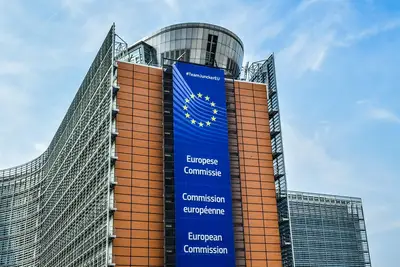
The status of these negotiations was often discussed by leadership. In November 2012, European Commissioner for Neighbourhood and Enlargement Stefan Fule stated that the AA negotiations could be finalized by November 2013. This period marked a push toward formalizing the partnership.
How did the SAA impact Serbia and other regions?
A researcher compares different regional treaties in a library. While the focus is often on specific bilateral ties, the broader context of stability and association agreements in the Balkans provides a comparative backdrop.
The SAA impact on Serbia and similar agreements in the region have shaped much of the Balkan political landscape.
The processes for accession and association are often complex and vary by country. For instance, the ratification of the EU Stabilisation and association Agreement with Croatia had been stalled because of certain domestic factors.
These regional dynamics often influence how other neighbors approach their own negotiations.
The SAA impact on Serbia and the broader Balkan region demonstrates the ripple effect of EU integration. The EU accession process often requires meeting rigorous standards that can lead to significant domestic changes.
These changes are intended to foster stability and economic cohesion across the continent.
What are the challenges of EU accession Serbia and Georgia?
A policymaker examines a map of Europe, tracing the borders of various nations. The path toward membership is often met with both domestic support and external pressures. The EU accession Serbia and Georgia pathways involve navigating complex geopolitical interests and internal political shifts.
Political decisions regarding external unions can create friction with European standards.
In February 2013, the Deputy State Minister for European and Euro-Atlantic Integration of Georgia, Tamar Beruchachvili, stated that Georgia had no plans to join the Eurasian Economic Union, which Fule has warned Ukraine would be incompatible with the agreements with the EU.

Internal stability remains a constant variable in the accession process.
A key development occurred in April 2024 when the country's State Security Service released an Annual Report accusing Western nations of attempting to destabilize the government through hybrid warfare, civil unrest, and ideological influence.
This highlights the volatility of the political environment.
How does the public view the current economic ties Serbia EU?
A citizen reads a newspaper at a cafe, considering the future of their country. Public opinion often fluctuates based on economic reality and political rhetoric.
Understanding the economic ties Serbia EU and Georgia share requires looking at both the formal agreements and the public's perception of those benefits.
Public sentiment can be a driving force for or against integration. For example, in a different context, a referendum on EU accession was held in Croatia on 22 January 2012, with 66% of participants voting in favour of joining the Union.
Such votes reflect the democratic will regarding the direction of national policy.
The relationship remains a subject of intense debate. The Serbia EU economic alignment and the Georgian path are influenced by how much the population believes integration will improve their quality of life. These factors determine the long-term viability of such comprehensive agreements.
What are the procedural steps for joining the EU?
An administrator organizes a stack of applications for a committee meeting. The process of moving from an association agreement to full membership is highly structured. The EU accession Serbia and Georgia processes are governed by specific institutional rules and oversight.
The following steps outline the general progression: 1. The European Commission submits regular reports (yearly) to the European Council to assess progress achieved by countries in preparing for accession to the European Union. 2.
Technical negotiations are conducted between the Union's Member States and the candidate country. 3. The European Commission primarily presides over these steps, including the Enlargement Commissioner and DG Enlargement.
These steps ensure that candidate countries meet the necessary criteria. The process is designed to be thorough, involving both political and technical scrutiny.
The process is not without its limitations. A limitation is that the actual negotiations are technically conducted between the Union's Member States and the candidate country, rather than solely by the Commission.
- How did the Association Agreement change Georgia's relationship with the EU?
- What were the early stages of the Georgia EU economic integration?
- How did the SAA impact Serbia and other regions?
Related



Comments 0