Cross-border divorce law: Guide to modern legal boundaries
"The complexity of legal boundaries often clashes with the fluidity of modern life, necessitating new frameworks for cooperation."
The rise of cross-border divorce law issues requires specific legal frameworks to manage jurisdictional disputes and asset division. This article explores how enhanced cooperation models serve as a template for addressing such multi-state legal challenges through structured inter-state agreements.
Key takeaways include the historical precedents of enhanced cooperation, the mechanics of participating member states, and the limitations of non-unanimous legal frameworks.
How does cross-border divorce law function in a multi-state environment?
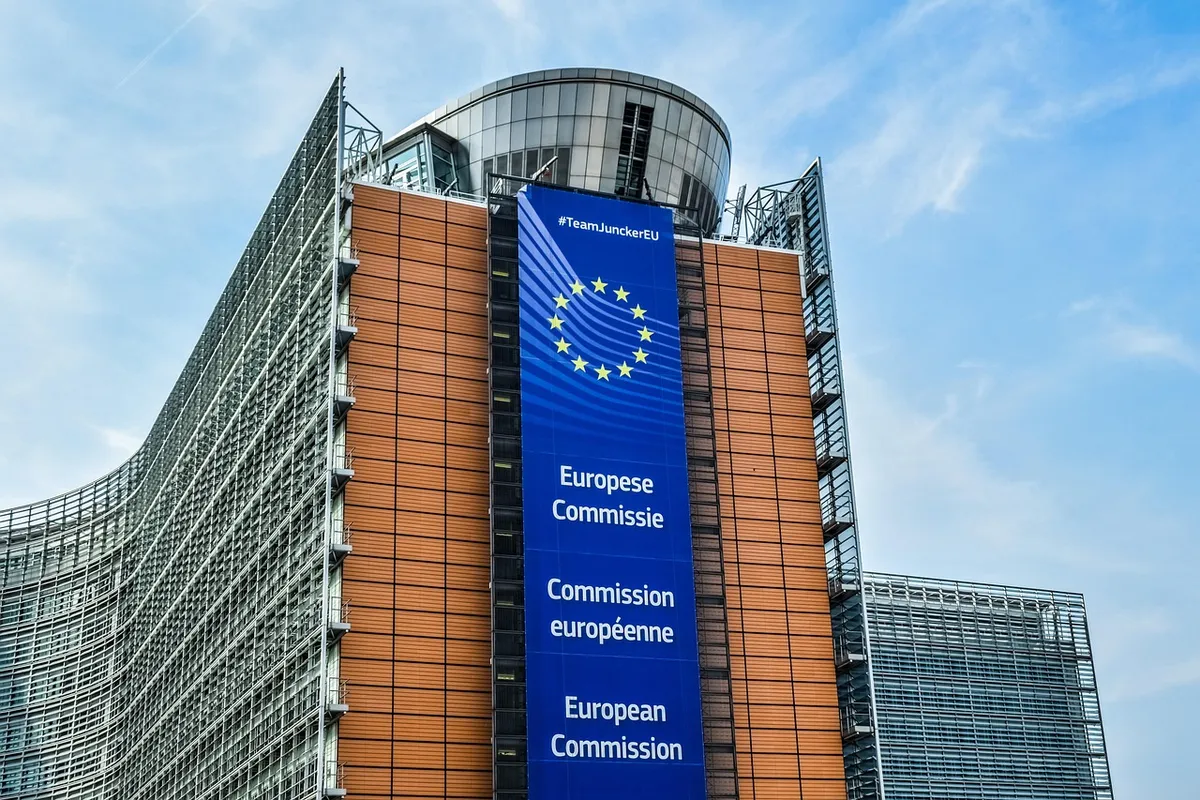
In a cold Brussels office at midnight, the lawyer sighs while he begins to cross the jurisdictional lines on the map.
A legal professional sits at a desk in Brussels, reviewing documents that span multiple jurisdictions. Solving these cases requires understanding how different nations manage shared legal responsibilities when a single rule cannot apply to everyone.
In instances where unanimous support is absent, the European Commission has historically proposed that enhanced cooperation allows specific states to implement shared measures.
For example, in October 2012, the European Commission proposed that enhanced cooperation be permitted to implement a specific tax in the states that wished to participate after discussions failed to establish unanimous support.
This model provides a pathway for legal cooperation even when total consensus is not reached.
Where did enhanced cooperation models come from? An official walks through a quiet hallway, holding a folder from a 2008 ministerial meeting. The history of these frameworks shows how groups of nations move forward when the entire bloc cannot agree on a single path.
The process of seeking enhanced cooperation often begins with a specific group of states. According to Wikipedia, at a meeting of the justice ministers on 25 July 2008, the nine states decided to formally seek the measure of enhanced cooperation.
Following this decision, eight states formally requested it from the European Commission on 28 July 2008. These historical actions established the groundwork for how modern legal and economic cooperation is structured today.
How do these frameworks handle economic and legal integration?
A diplomat sits at a heavy oak desk in the evening, feeling the weight of the treaty as he prepares to cross the divide between disparate laws.
A diplomat reviews a treaty that merges various pacts into a single legal structure. Integration efforts often involve bringing existing agreements under a unified legal umbrella to provide stability.

The integration of various pacts into EU law has been a recurring goal for policy makers. In July 2015, the European Commission proposed to integrate the Euro Plus Pact, European Fiscal Compact, and the Single Resolution Fund into EU law by June 2017.
This type of movement aims to streamline how different agreements function within a unified legal environment.
Can certain groups form their own agreements? A group of delegates meets in a conference room to finalize an economic arrangement. When certain nations share specific goals, they can form specialized pacts that include both Eurozone members and external participants.
The Euro Plus Pact serves as an example of such a specialized arrangement. It is an arrangement for cooperating in economic measures adopted on 25 March 2011 by the European Council through the Open Method of Coordination.
It includes as participants the Eurozone member states, plus Denmark, Poland, and Romania. These types of agreements allow for targeted cooperation without requiring the participation of every single member state.
What are the steps for implementing enhanced cooperation?
A clerk prepares a list of participating countries for a new regulatory framework. Implementing these models involves a clear progression from initial proposal to formal adoption by a qualified majority.
To understand how these models work, one must look at the structural progression: 1. A proposal is put forward by a governing body to address a specific need. 2. The Council adopts a decision by a qualified majority to establish permanent structured cooperation. 3.
The participating Member States are officially determined and listed within the decision.
I observed how these structured lists define the boundaries of legal authority for each participant.
What are the limitations of these legal models?
A lawyer examines a contract, noting the specific conditions under which the agreement remains valid. Limitations are often defined by the specific group of participants and the scope of the agreement.
A significant limitation is that these models only apply to the states that actively participate in the enhanced cooperation. For instance, the Euro Plus Pact remains limited to its specific participants, such as the Eurozone members plus Denmark, Poland, and Romania.

This means that the legal effects of such cooperation do not automatically extend to non-participating states.
- How does cross-border divorce law function in a multi-state environment?
- What are the origins of enhanced cooperation models?
- How do these frameworks handle economic and legal integration?
The subject here is Cross-border divorce law.
The same subject is also called International divorce cases.
The same subject is also called EU divorce cooperation.
The same subject is also called Legal aid divorce Europe.
The same subject is also called Cross-border family law.
This part also covers Strengthening divorce cooperation.
Related
- Digital Euro implementation review: How market rules guide
- EU ID regulation changes: Guide to legislative process
When is enhanced cooperation most necessary? 1. Enhanced cooperation becomes necessary when the complexity of legal boundaries prevents a single, unified rule from governing a situation. 2. This necessity arises when modern life involves activities that span multiple jurisdictions, such as cross-border divorce.
This mechanism provides a structured way to address multi-state legal challenges when the entire body cannot reach a consensus on a single path forward. The need for such frameworks underscores the friction between established legal structures and evolving societal realities.
How does the scope of cooperation influence legal outcomes? The scope of the cooperation dictates the legal effects that result from the agreement. For example, the Euro Plus Pact's scope is restricted to its named participants, which limits the applicability of its economic measures. This limitation demonstrates how the defined boundaries of the cooperation directly shape the resulting legal landscape.
Wikipedia: Enhanced cooperation (full) Based on the retained excerpt mentioning The European Commission: The European Commission proposed in July 2015 to also integrate the Euro Plus Pact, European Fiscal Compact and the Single Resolution Fund into EU law by June 2017, while planning for the European Stability Mechanism to make the same transition by 2025.





Comments 0