EU Tightens Net: Small Ships Must Comply with Carbon Pricing
"The era of unregulated emissions is closing, and the cost of carbon is moving from the smokestacks to the docks."
The European Union is expanding its carbon pricing mechanism to include smaller maritime vessels, forcing a new era of accountability for sea-based emissions. This regulatory shift aims to close loopholes that previously allowed smaller maritime operators to bypass strict climate standards.
* The EU is applying its robust carbon pricing mechanism (ETS) to the maritime sector, specifically targeting smaller vessels. * This move represents a major regulatory push by the EU to enforce its climate commitments across all forms of transport. * The integration of small vessels into the ETS signals a phase-out of lenient environmental standards in European waters.

Why is the scope of the ETS expanding now?
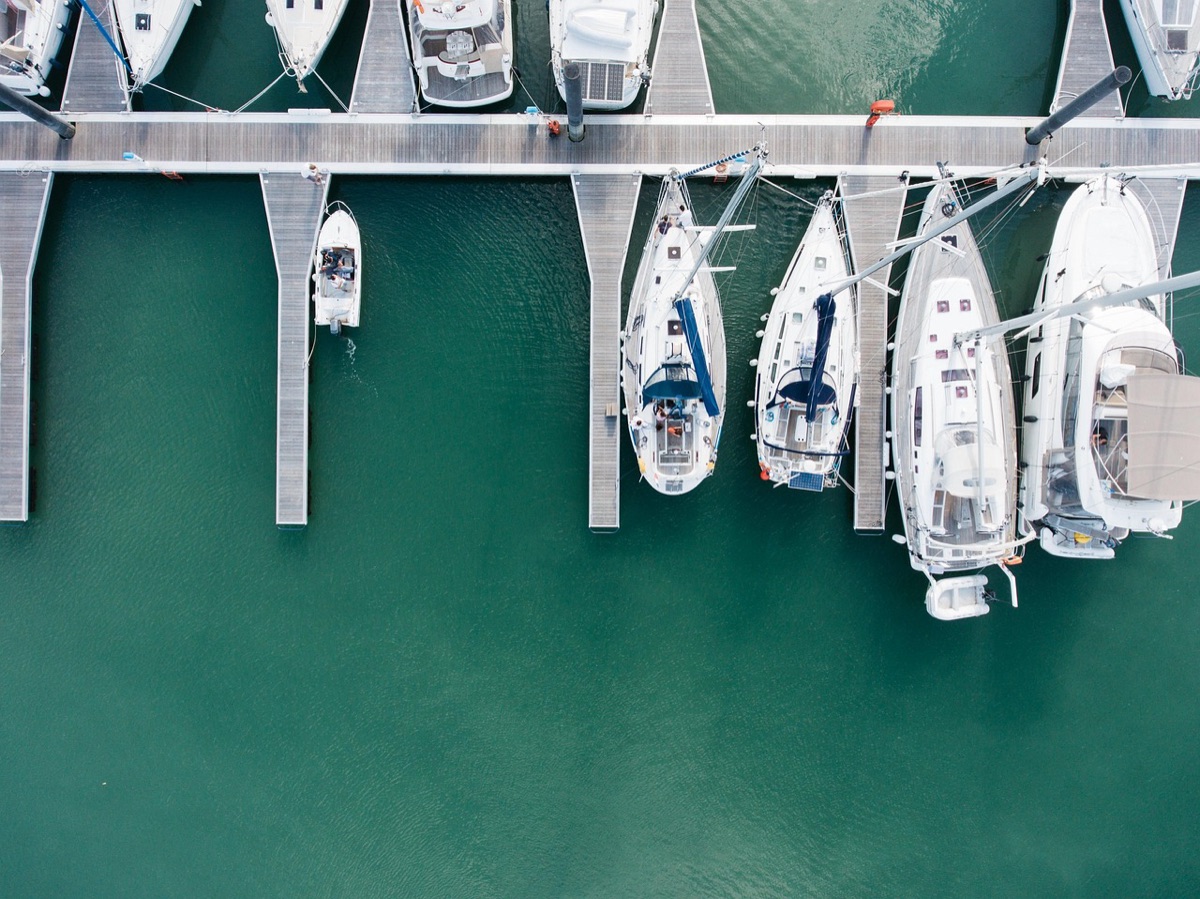
At 5:30 AM, a quiet harbor is shrouded in mist, and the only sound is the gentle slap of water against a wooden hull. For years, these smaller vessels operated under a different set of rules, often exempt from the heavy carbon costs faced by massive container ships.
The EU Emissions Trading System (ETS) is a market-based mechanism that sets a cap on greenhouse gas emissions. By creating a limited number of "allowances," the system ensures that any entity emitting carbon must own a permit to do so.
While large-scale industrial emitters have long been under this microscope, the expansion to include small vessels brings a previously less-regulated segment into the compliance framework.
This expansion is not a sudden whim but a calculated step toward total maritime accountability. In previous phases, the scope was limited to heavy industry and large-scale power generation.
Now, as the EU pushes toward more aggressive climate targets, the "leakage" of emissions from smaller vessels must be addressed to ensure a level-playing-field across all maritime activities.
The transition from broad industrial oversight to specific maritime regulation marks a shift in how the EU views environmental responsibility. It is no longer just about the giant smokestacks; it is about every engine that burns fuel on European waters.
But the shift from industrial oversight to maritime regulation creates a new set of practical hurdles.
How will this regulation affect small vessel operators?
An owner of a small commercial ferry stands on a pier at noon, looking at an aging engine and calculating the cost of fuel against the rising tide of new paperwork. For these operators, the new regulation is not just an environmental policy; it is a fundamental change to their business model.
Under the new rules, operators must account for and surrender allowances that correspond to their operational emissions. This means that every ton of CO2 emitted during a voyage must be matched by a digital credit held in an account. This creates a direct, tangible cost for every mile traveled.
Small vessel owners now face two primary paths to remain compliant. They can either adapt their operational practices—such as optimizing routes or reducing speed—or they must invest heavily in abatement technology, such as hybrid propulsion or more efficient engines.
The economic impact is immediate. The cost of these allowances acts as a tax on carbon, directly increasing operational overheads. For a small business, this requires new, complex financial modeling to ensure that the cost of compliance does not outpace their profit margins.
When I first looked at the projected cost increases for local transit operators, the math was sobering. It isn't just a line item; it's a shift in the entire economic foundation of maritime travel.
| Impact Category | Operational Change Required | Financial Implication |
|---|---|---|
| Fuel Consumption | Shift toward high-efficiency engines | High initial capital expenditure |
| Route Planning | Optimization to minimize emissions | Increased administrative workload |
| Compliance | Rigorous monitoring and reporting | Ongoing cost of purchasing allowances |
The financial pressure is undeniable, but understanding where this all started helps make sense of the current chaos.
How did the EU's climate action begin? A dusty archive holds the records of decades of policy shifts, showing a slow but steady tightening of the screws on carbon emissions. The journey of the ETS has been one of constant evolution, moving from a pilot-style framework to a cornerstone of global climate policy.
The ETS was designed to grow alongside technological capabilities and political will. In its early years, the system focused on establishing a stable market for carbon.
However, as the reality of climate change intensified, the caps on emissions were lowered, and the scope was widened to include more sectors.
Historically, these milestones show a clear trajectory of tightening control. For example, looking back at the early 2000s, the regulatory landscape was much more permissive.
In 2006, the European Commission confirmed that verified CO2 emissions were approximately 80 million tonnes, which was about 4% lower than the number of allowances distributed to installations for 2005 emissions.
This early gap showed that the system was already beginning to influence industrial behavior.
The scale of the challenge has grown significantly. While early targets focused on specific industrial clusters, the current goal is to integrate emissions from almost every major economic activity. This historical momentum makes the inclusion of small vessels a logical, if difficult, next step.
But how do we know if these historical shifts actually work in the real world?
What has the ETS actually achieved so far? A researcher looks at a digital graph where a line representing emissions steadily trends downward, even as economic activity climbs. This visual represents the primary argument used by policymakers to justify the expansion of the ETS to new sectors like small vessels.
According to the European Environment Agency, EU-15 emissions averaged 11.8% below base-year levels during the 2008–2012 period.
The data suggests that the ETS has been effective in its primary mission. During the 2008–2012 period, emissions from the EU-15 countries averaged 11.8% below their base-year levels. This demonstrates that a cap-and-trade system can successfully decouple economic growth from carbon output.
The role of the market has been to drive behavioral change. When carbon has a price, companies find ways to avoid that price. This has led to massive investments in renewable energy and energy efficiency across Europe.
According to World Bank data, the European Union recorded a renewable energy share of final consumption of 21.1% in 2020, a testament to the shifting energy landscape driven by such policies.
However, the success in one sector often creates a vacuum in another. As large-scale industries become cleaner, the relative impact of unregulated sectors—like small maritime vessels—becomes more apparent.
The goal now is to ensure that these "remaining" emissions are brought under the same rigorous standards that have already transformed the power and heavy industry sectors.
This leaves us looking toward an uncertain and rapidly changing horizon.
What is the future trajectory of EU environmental policy?
A futuristic shipyard stands quiet, filled with vessels that look more like high-tech computers than traditional boats. This vision of a carbon-neutral maritime industry is the ultimate goal of the current regulatory expansion.
As reported by the European Commission, the ETS is set to cover around 40% of the EU's greenhouse gas emissions as of 2026.
The long-term vision of the EU is comprehensive decarbonization. The objective is to reach climate neutrality, where the total amount of greenhouse gases emitted is balanced by the amount removed from the atmosphere.
To achieve this, every sector, including maritime transport, must contribute to the reduction.
This trajectory necessitates rapid innovation. Shipbuilding technology must advance to meet stricter caps, moving toward electric, hydrogen, or ammonia-based propulsion. The regulatory trend is clear: there will be no more leniency.
As the cap on total emissions continues to tighten, the pressure on small vessel operators to innovate will only increase.
The transition will not be easy, and there are trade-offs. Smaller operators may struggle more than large corporations to absorb these costs, potentially leading to market consolidation.
However, from a policy perspective, the EU is signaling that environmental integrity requires a universal approach, where no vessel is too small to be part of the solution.
How to Navigate the New Regulations
If you are an operator preparing for these changes, follow this checklist to manage the transition:
- Conduct an Emissions Audit: Calculate your current annual CO2 output to determine the number of allowances you will need to purchase.
- Implement Monitoring Systems: Install digital tracking tools to record fuel consumption and emissions in real-time to satisfy reporting requirements.
- Evaluate Propulsion Upgrades: Compare the cost of purchasing allowances over five years against the capital cost of upgrading to a more efficient or hybrid engine.
- Optimize Operational Routes: Use GPS and weather-routing software to minimize fuel burn and reduce the total carbon footprint per voyage.
- Establish a Compliance Account: Set up the necessary digital accounts and financial protocols to purchase and surrender allowances on time.
#


Comments 0