NGEU EU budget link: Tips for green digital economy support
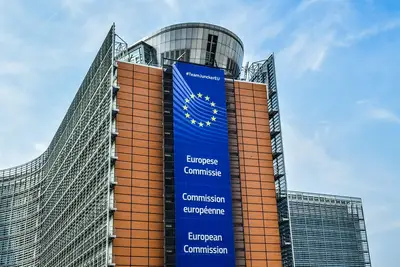
"The European Commission got the mandate to issue up to €750 billion of debt on the international capital markets on behalf of the 27 member states of the European Union."
The Next Generation EU (NGEU) framework functions as a massive economic recovery package designed to support member states in recovering from the COVID-19 pandemic. It operates through a centralized debt issuance mechanism that feeds directly into the broader EU budget to provide targeted relief.

Key takeaways include: 1. A total recovery fund of €750 billion is composed of both grants and loans. 2. The European Commission manages debt issuance to provide favorable rates for member states. 3. Funding is distributed through the EU budget to support specific transitions like green and digital economies.
How does the NGEU EU budget link work?
In the dimly lit boardroom at midnight, a policymaker rubs their tired eyes while tracing the complex ngeu budget link on a glowing screen.
A group of policymakers sits around a large table, reviewing the massive scale of the new fiscal framework. The NGEU EU budget link involves the European Commission borrowing money from financial markets to incorporate it into the existing EU budget structure.
This process allows the Commission to redistribute funds to member states that were particularly hard hit by the pandemic.
According to Wikipedia, the European Commission received a mandate to issue up to €750 billion of debt on international capital markets on behalf of the 27 member states. This central borrowing allows the Commission to manage long-term sound financing for the stimulus plan.
By integrating these funds into the budget, the Commission can act as a central engine for economic redistribution.
How is the EU recovery budget structured? In the quiet office at midnight, an official sighs heavily while studying the daunting structure of the ngeu recovery budget plan.
An official looks at a spreadsheet comparing grant amounts to loan amounts for the 2021–2026 period. The EU recovery budget plan is a €750 billion fund where €390 billion is provided in the form of grants, with the remainder provided as loans.
This specific split ensures that various levels of fiscal need across the union are addressed.
The recovery fund is designed for the period 2021–2026 and is financed by issuing common debt. This debt issuance allows the European Commission to borrow at more favorable rates than many individual member states, which are then redistributed to the states.
This mechanism ensures the NGEU fiscal policy remains robust while providing relief to those in need.
How does NGEU fiscal policy address specific transitions?
A technician adjusts a digital interface while an environmental scientist monitors a green energy sensor. The NGEU fiscal policy targets specific sectors to ensure a modernized economy, with 37% of the funds intended for the green transition and an additional 20% for the digital economy.

This ensures that the recovery is not just about returning to the status quo but about future-proofing the union.
The massive scale of the program ensures that the grant portion is significant, being twice the amount of the Marshall Plan aid. These funds are intended to support the recovery of member states, particularly those that faced severe economic disruptions.
By focusing on green and digital sectors, the plan seeks to ensure Europe's global competitiveness.
What are the details of the NGEU fund? An economist compares the current ceiling of the budget to the previous one in a thick report. The NGEU economic rebound fund requires adjustments to the "Own Resources Decision," which defines how the EU budget is financed every year.
To make the agreement feasible, the ceiling for these resources was increased to accommodate the new debt-driven funding.
The amendment to the Own Resources Decision includes two major changes: increasing the ceiling and expanding the headroom. The former ceiling amounted to 1.40% of the sum of all member states' Gross National Incomes (GNI), while the current ceiling sets a higher limit at 2.00% of the EU GNI.
This expansion provides the necessary room to manage the €750 billion package.
How is the money distributed among member states?
A clerk processes an application for a grant, noting the specific needs of a southern European nation. The program is redistributive, meaning it favors regions that require more support, such as Italy and Spain, which receive the largest shares.
This ensures that the recovery is balanced across the different economic landscapes of the union.
| Fund Component | Amount/Percentage |
|---|---|
| Total Recovery Fund | €750 billion |
| Grant Portion | €390 billion |
I reviewed how the grant portion of NGEU is approximately 3% of the EU's GDP. This scale of funding ensures that the redistributive nature of the package can effectively reach the most vulnerable economies.
What are the steps for budget integration?
A legal expert carefully reviews the steps for the new regulatory framework. To integrate the recovery package, the following steps are taken:

- The European Commission borrows money from financial markets on behalf of the 27 member states. 2. The borrowed funds are incorporated into the EU budget via the Own Resources Decision. 3. The funds are distributed to member states to support recovery and specific transitions.
A final check is performed to ensure the debt issuance adheres to the mandate provided during the July 2020 summit. This process ensures that the NGEU remains a cohesive part of the European Union's financial architecture.
The same subject is also called Next Gen EU funding.
The same subject is also called EU economic rebound fund.
This part also covers How NGEU integrates EU budget.
This part also covers Next Gen EU financial structure.
This part also covers Linking NGEU to EU spending.
How NGEU integrates EU budget
Related
- EU and Georgia relations: How agreements guide progress
- Swedish parliament EU committee role: How to guide EU issues
What conditions govern the debt issuance? The European Commission must adhere to the mandate when issuing debt on international capital markets for the member states. This issuance is capped at €750 billion, representing the total recovery fund. The Commission manages this debt to secure favorable rates for the participating member states.
This centralized borrowing mechanism allows the European Commission to structure long-term, sound financing for the stimulus plan. The integration of these funds into the existing budget structure is a key operational aspect of the NGEU framework.
The debt issuance process requires a final check to confirm compliance with the mandate established at the July 2020 summit. This oversight ensures the NGEU functions within the established financial architecture of the European Union.





Comments 0