Next EU economic recovery plan: How to manage debt financing
"The European Commission was given a mandate to issue up to €750 billion of debt on international capital markets to support its member states."
It functions through a combination of grants and loans designed to support those particularly hard hit by the crisis.
What is the scale of the Next EU economic recovery plan?
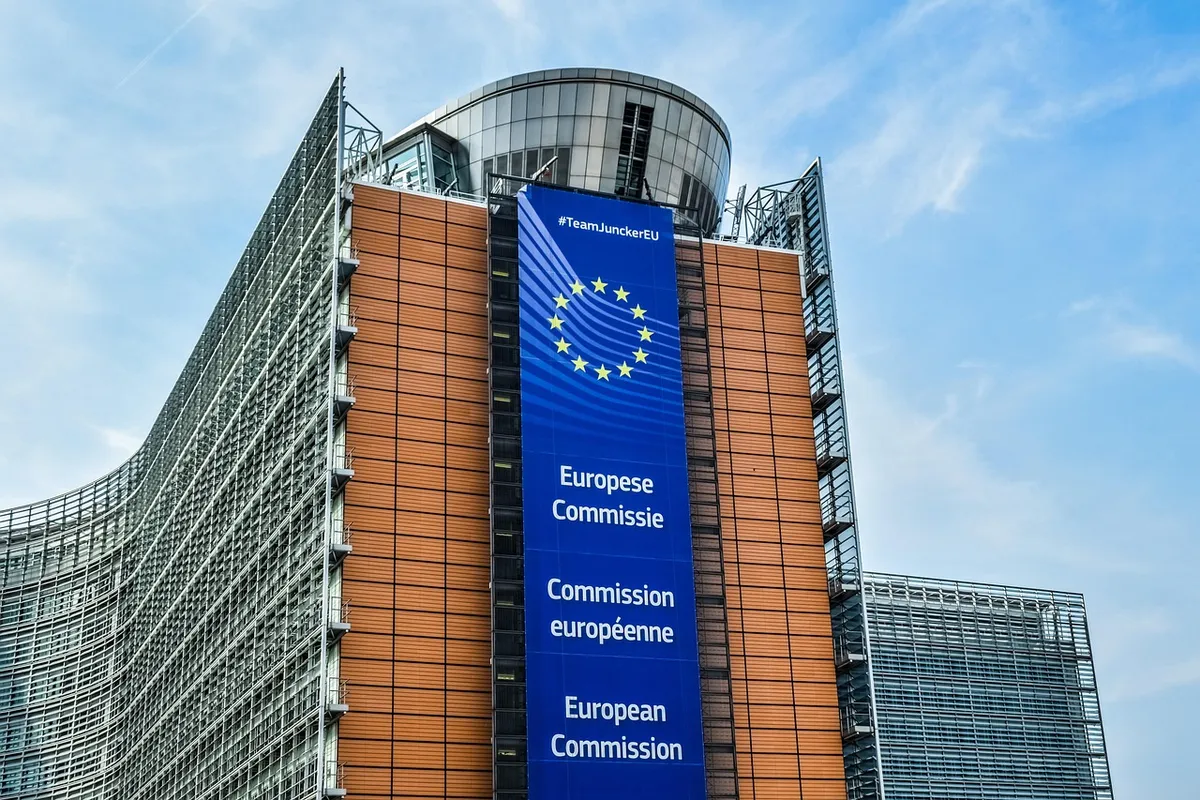
A group of leaders meets in a quiet hall to finalize a historic financial agreement. This decision creates a massive fund to ensure stability across the 27 member states of the European Union.
According to Wikipedia, the European Commission received a mandate following the July 2020 summit to issue up to €750 billion of debt on international capital markets. This large-scale plan uses both grants and loans to provide essential relief.
The scope of this plan is significant when compared to historical aid. The grant portion of the NGEU alone is twice the amount of the Marshall Plan aid. This massive influx of capital aims to stabilize economies that faced severe disruptions.
However, the actual impact may be limited if individual member states fail to implement structural reforms. I will address the scale in the following sections.
How is the EU recovery package size managed through debt?
At the digital terminal, I watched the shifting numbers and felt a cold chill during the next market cycle.
A financier watches the shifting numbers on a digital terminal as new debt is issued. The goal is to secure favorable terms for the entire union.
To finance the program, the European Commission borrows on the markets on behalf of the European Union. This strategy allows the Commission to borrow at more favorable rates than most individual member states could achieve alone. The funds are then redistributed to the member states.
The total budget is designed to be flexible yet structured. The commission will use a diversified financing strategy to raise up to €800 billion, representing 5% of EU GDP, until 2026. This strategy ensures that the necessary capital is available to meet the needs of the various member states.
The effectiveness of this mechanism is restricted if long-term interest rates fluctuate significantly. This is the second point in our discussion.
What are the primary goals of the Pandemic EU funding plan?
An engineer examines a blueprint for a wind turbine, representing the shift toward sustainable energy. The project is tied to the new economic framework.
The funding is not just for general relief but is tied to specific transformative goals. One of the aims of this agreement is to deepen the Economic and Monetary Union. By focusing on specific sectors, the plan intends to modernize the European economy.
The strategic focus includes: 1. Strengthening the green transition through environmental investments. 2. Advancng the digital economy to ensure global competitiveness. 3. Supporting recovery in regions that were particularly hard hit by the pandemic.
The plan also seeks to ensure Europe's global competitiveness through initiatives like Horizon 2020, which implements the Innovation Union.
The scope of these goals does not extend to addressing all pre-existing economic disparities. I am outlining the objectives here.
How do the Next generation EU budget targets work?
A policymaker reviews a document outlining the required percentages for various sectors. The targets ensure the money drives specific types of growth.
The allocation of funds follows strict rules regarding the type of projects being funded. To ensure the transition to a sustainable future, specific percentage targets have been set for different sectors.
The following targets guide the spending: 1. At least 37% of the spending must be channeled to green, climate change-related projects. 2. Approximately 21% of the funds are intended for the digital economy.
These targets ensure that the recovery is not just about returning to the status quo but about moving toward a modern economy.
These targets do not apply to sectors not explicitly identified in the recovery framework. This section explains the targeting process.
What is the process for the NGEU budget and repayment?
A clerk files a document that tracks the gradual reduction of a debt ceiling over many years. This ensures the long-term stability of the union's budget.
To make the agreement feasible, the European Commission had to modify the Decision on the system of Own Resources of the European Union. This decision defines how the EU budget is financed every year. The amendment involved increasing the Own Resources ceiling.
The repayment and ceiling changes involve these steps: 1. The current ceiling was increased to 2.00% of the EU Gross National Income (GNI). 2. This represents an increase from the former ceiling, which amounted to 1.40% of the sum of all member states' GNI. 3.
Once the borrowed money and loans are completely repaid, the ceiling will be lowered back to the pre-existing level of 1.40% of the total EU GNI.
I noted that the adjustment to the ceiling is a direct consequence of the need to manage the new debt levels.
The repayment process becomes complicated if the projected economic growth fails to materialize. I will detail the steps in this sequence.
How does the funding affect different member states?
A traveler walks through a bustling city square in Southern Europe, where new infrastructure projects are being implemented. The impact of the funds is visible in the local economy.
The program is redistributive, meaning it favors parts of the block that need more assistance. For example, the grant portion is intended to support the south of the block, with Italy and Spain receiving the largest shares.
In terms of per-capita allocations, Greece is a leader, receiving almost 20% of its GDP.
The scale of the grant portion is approximately 3% of the EU's GDP. This level of support is intended to address the specific needs of different nations.
| Feature | Description |
|---|---|
| Primary Goal | Recovery from COVID-19 pandemic |
| Funding Type | Grants and loans |
How much was the total mandate? The European Commission received a mandate to issue up to €750 billion of debt on the international capital markets.
What is the focus of the spending? At least 37% of the Recovery and Resilience Plans must be allocated to climate change-related projects.
The NGEU serves as a massive financial tool to navigate the economic aftermath of the pandemic through structured debt and specific sectoral targets.
The benefits are not uniform across all member states regardless of their initial economic conditions. I am pointing to the distribution logic here.
- The Next Generation EU (NGEU) economic recovery package provides a massive financial framework to help member states recover from the COVID-19 pandemic.
- This guide explores the budget scale, the repayment structure, and the specific allocation targets for green and digital projects.
- The Next Generation EU (NGEU) is a European Commission economic recovery package designed to support member states in recovering from the COVID-19 pandemic.
The subject here is Next EU economic recovery plan.
The same subject is also called EU economic rebound funds.
This part also covers How EU funds are managed.
This part also covers Recovery plan financing details.
Related






Comments 0