Brexit vote key issues: Trade impacts guide UK economy
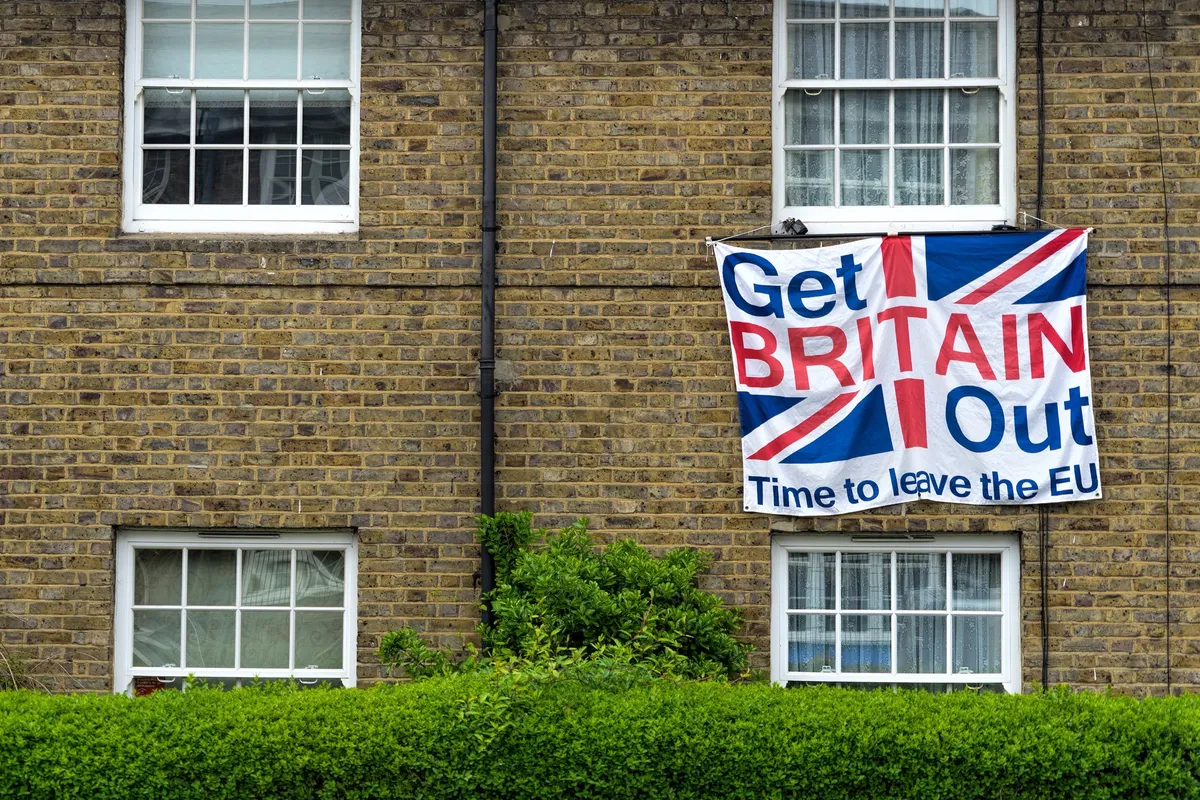
"The economic and social shifts following the 2016 referendum redefined the British political landscape, leaving a legacy of debate over sovereignty and trade."
The Brexit vote key issues centered on the tension between national sovereignty and economic stability. For voters navigating these choices, the primary concerns involved trade relationships, immigration, and the future of the UK's economic standing within Europe.
Key takeaways: * Economic forecasts varied widely, with potential impacts on GDP ranging from significant contraction to slight growth depending on future deregulation. * The debate over trade value versus autonomy shaped much of the campaign rhetoric.

* Political investigations later examined the role of funding and data in influencing voter decisions.
How did economic forecasts shape the Brexit vote?
At dusk, the researcher rubbed her tired eyes while staring at the jagged lines of the brexit projections on her screen.
A researcher looks over a series of complex graphs showing fluctuating lines of projected growth. These figures represent the various paths the British economy might take following a departure from the European Union.
Economic projections regarding the UK economy Brexit vote were notably diverse among various research groups.
According to Open Europe, the most likely permanent effect on annual gross domestic product by 2030 would range from −0.8% to +0.6%, though they noted +1.6% is possible under widespread deregulation.
In contrast, a more narrowly focused study by the Centre for Economic Performance at the London School of Economics placed the figure between −9.5% and −2.2%.
Another research group, Oxford Economics, suggested that the impact on the British economy would be between −0.1% and −3.8% by 2030, depending on the new trading relationship with the EU, compared to if the UK had remained.
These varying figures highlight how the Brexit voter concerns were often driven by different interpretations of future financial stability.
What role did trade play in the decision? Brexit vote key issues
The negotiator gripped the edge of the heavy wooden table in the silent office, feeling the weight of the brexit trade papers in his hands.
A negotiator sits at a large wooden table, moving papers that detail the vast sums of money moving across borders every year. The weight of these figures represents the stakes of the negotiation.
The debate over trade with the EU was a central pillar of the campaign. While those wanting to stay pointed to the fact that trade with the EU is valued at £400 billion annually, representing 52% of the total, those arguing to leave suggested its trade is not as important as it used to be.
This disagreement over the importance of current trade versus future autonomy was a major factor in the voter priorities in Brexit poll.
The impact of these trade shifts remains a subject of intense study. For those analyzing the immigration impact Brexit, the movement of goods and people is inextricably linked.
How did political integrity affect the vote?
An official reviews a set of audit documents, highlighting discrepancies in reported spending and loan amounts. The paper trail reveals the complexities of campaign finance.
The integrity of the voting process became a significant point of discussion after the results were announced. In May 2018, the Electoral Commission fined Leave.EU £70,000 for unlawfully overspending and inaccurately reporting loans from Arron Banks totalling £6 million.

This instance of regulatory action highlighted the scrutiny regarding how campaigns were funded.
The implications of these financial movements led to further political scrutiny. In February 2019, the parliamentary Digital, Culture, Media and Sport Committee called for an inquiry into "foreign influence, disinformation, funding, voter manipulation, and the sharing of data" in the Brexit vote.
These inquiries sought to understand how external factors might have influenced the democratic outcome.
What were the demographic shifts in voting?
A pollster watches a screen as data points representing different population groups flicker in and out of focus. The data reveals the uneven landscape of political engagement.
Demographics played a significant role in the election results. For example, an Ipsos MORI poll in February 2016 found that 54% would vote Yes to independence in certain circumstances, with 39% voting 'No' and 7% unsure.
Additionally, while white voters were evenly split, all ethnic minority groups leant towards backing Remain, though registration is lower and turnout can be up to 25% lower in this demographic.
The distribution of these votes shows how different groups prioritized different issues. While some focused on the immediate economic shifts, others were moved by the social implications of changing borders.
How were the negotiation timelines managed?
A diplomat checks a calendar, marking off dates that represent the high-stakes deadlines of international treaties. The ticking clock adds a sense of urgency to the room.
The timeline of the departure was a constant source of political maneuvering. In March and April 2019, Prime Minister Theresa May and the European Council agreed to move the date of the UK's departure to 31 October 2019.
This shift was part of the complex negotiations involving figures like Oliver Robbins, Europe Advisor to the Prime Minister, and chief negotiator David Davis, who served as Secretary of State for Exiting the European Union until 8 July 2018.
The possibility of a "no-deal" scenario was also a major factor in the planning. A 4 March 2017 report of the European Union Committee of the House of Lords stated that, if there is no post-Brexit deal at the end of the two-year negotiating period, the UK could withdraw without payment.
What were the specific steps in the transition?
A clerk organizes a series of folders, each representing a different phase of a long-term administrative process. The transition requires careful, methodical planning to avoid chaos.
To understand the transition process, one must look at the structured attempts to manage the exit:
- 2. Addressing the legalities of a potential withdrawal without a deal to understand the worst-case financial scenarios. 3.
I observed how these specific administrative steps were often overshadowed by the larger economic debates. A final check of the legal frameworks was necessary to ensure any withdrawal adhered to international standards.
The transition process was not applicable to all sectors equally, as certain economic variables were subject to different levels of volatility. For instance, the possibility of a no-deal withdrawal was a condition that applied specifically to the end of the two-year negotiating period.
- How did economic forecasts shape the Brexit vote?
- What role did trade play in the decision?
- How did political integrity affect the vote?
The subject here is Brexit vote key issues.
The same subject is also called Economic fears UK exit.
Related





Comments 0